
Leica THUNDER Imager Live Cell & 3D Assay
THUNDER Imagers give you confidence from the start of every experiment. They’re your solution for advanced 3D cell culture assays, whether you’re studying stem cells, spheroids, or organoids.
THUNDER Imagers feature Leica’s innovative Computational Clearing technology, which efficiently removes out-of-focus blur in real time, allowing you to meaningfully study 3D specimens with camera-based fluorescence microscopes. The system’s high sensitivity ensures low phototoxicity and photobleaching, meaning higher throughput with optimal conditions.
THUNDER Imagers feature Leica’s innovative Computational Clearing technology, which efficiently removes out-of-focus blur in real time, allowing you to meaningfully study 3D specimens with camera-based fluorescence microscopes. The system’s high sensitivity ensures low phototoxicity and photobleaching, meaning higher throughput with optimal conditions.

REQUEST A QUOTE / ENQUIRY FORM

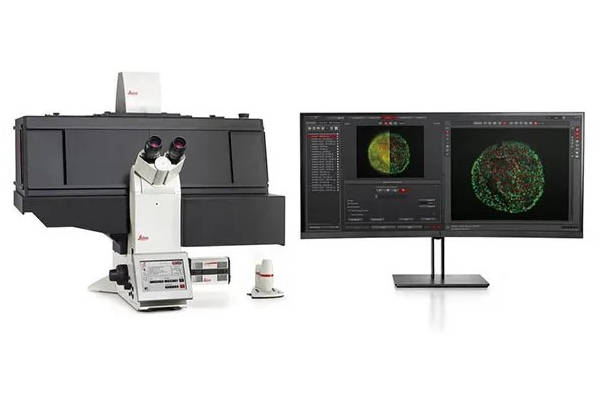
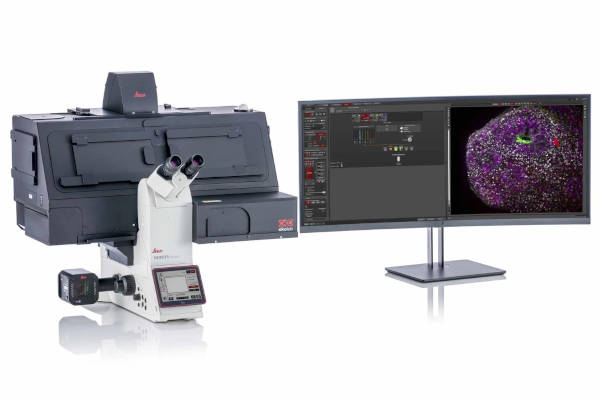

High throughput for better statistics and workflow efficiency
Automate your 3D cell culture assays to study next-generation disease models efficiently. THUNDER enables you to image large sample volumes, such as lung organoids, at high speed. In addition, the automation minimizes user interaction even for complex experiments.
The outcome is:
The outcome is:
- Precise and reliable data in less time
- Higher throughput
- Better statistics and results
THUNDER Imager Live Cell is based on a fully motorized DMi8 microscope, Quantum Stage, highly sensitive K8 camera, and multi-line, high-intensity fluorescence LED light source. It is optimized for fast and precise multi-position, multi-channel imaging of 3D cell cultures.
Optimal physiological conditions – minimum light exposure
For 3D cell culture, observing the true physiology is paramount for meaningful results. Typically, you want to investigate your cells while they are in a close to natural state by optimizing experimental conditions, e.g., the lowest light intensity and shortest exposure times possible.
THUNDER Imager Live Cell meets these demands with a high-end LED source that has a small bandwidth optimized for excitation. Even with low illumination and short exposure times, the sensitive high-end sCMOS camera delivers meaningful image information thanks to a quantum efficiency of up to 82%.
To further reduce exposure of the sample to light, illumination is limited to the actual recording time. The camera shutter is synchronized with the high-speed (20 µs switching time) Lumencor LED light source to minimize photobleaching.
THUNDER Imager Live Cell meets these demands with a high-end LED source that has a small bandwidth optimized for excitation. Even with low illumination and short exposure times, the sensitive high-end sCMOS camera delivers meaningful image information thanks to a quantum efficiency of up to 82%.
To further reduce exposure of the sample to light, illumination is limited to the actual recording time. The camera shutter is synchronized with the high-speed (20 µs switching time) Lumencor LED light source to minimize photobleaching.
Find the THUNDER Imager that’s right for you
Whether you are looking for a dedicated high-end imaging system that excels in a given application, or a versatile solution for a lab running different kinds of assays with various samples, we’ve got you covered.
Keep the right environment while observing your live cell cultures
THUNDER Imager Live Cell has all you need to maintain your cells at a close to natural state. The incubator ensures optimal physiological conditions for living cell cultures, such as system stability, humidity, temperature, and carbon dioxide level (pH value).
Thanks to the water immersion microdispenser, you can use a water-immersion objective for multiwell workflows even when you are doing long-term experiments. Water immersion objectives enable higher light collection leading to acquisition of cell images with higher contrast and resolution.
Thanks to the water immersion microdispenser, you can use a water-immersion objective for multiwell workflows even when you are doing long-term experiments. Water immersion objectives enable higher light collection leading to acquisition of cell images with higher contrast and resolution.
Developing Zebrafish Pancreas
The THUNDER Imager 3D Assay enabled clear identification of Alpha (GFP-green) and Beta (mCardinal-red) cells within a developing zebrafish pancreas.
Imaged in the blue (Hoechst), green (GFP), and red (mCardinal) channels, this 150-image z-stack was completed with all channels within a minute.
Physiological conditions can be maintained within a sample by minimizing photobleaching, providing high-performance imaging, and high-throughput of data, leading to better workflow efficiency.
Imaged in the blue (Hoechst), green (GFP), and red (mCardinal) channels, this 150-image z-stack was completed with all channels within a minute.
Physiological conditions can be maintained within a sample by minimizing photobleaching, providing high-performance imaging, and high-throughput of data, leading to better workflow efficiency.
Master time-lapse multi-position experiments: tracking cell changes
THUNDER Imager Live Cell offer both speed and reliability for your 3D cell culture multiwell experiments. For example, when tracking the growth and development of spheroids and organoids, its speed and reliability allows you to obtain excellent results.
Accurate time-lapse multi-position experiments and tracking of cell changes are achieved with this THUNDER Imager due to:
Accurate time-lapse multi-position experiments and tracking of cell changes are achieved with this THUNDER Imager due to:
- Reliable drift correction with the Adaptive Focus Control (AFC)
- Software autofocus that compensates for changes in specimen position
- Reproducible Z-positioning with a precision of up to 20 nm (closed-loop focus)
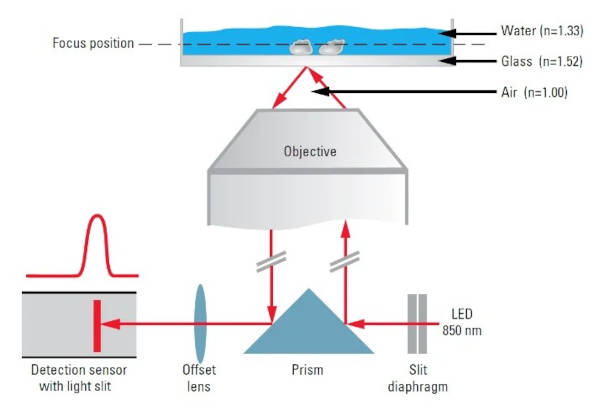
Routine, reliable data acquisition
THUNDER Imager Live Cell enable reliable image data acquisition with accurate focus maintained on the live cells at all times.
Live cell imaging is often tricky, because of drift, morphology change, or growth of the cells. Drift is caused by vibrations, mechanical creep, or temperature fluctuations. Both drift and cell changes can reduce the reliability of the acquired image data, as focus becomes an issue. Thanks to the Adaptive Focus Control (AFC), closed-loop focus, and software autofocus, THUNDER Imager Live Cell reliably maintains focus for your multi well experiments.
Live cell imaging is often tricky, because of drift, morphology change, or growth of the cells. Drift is caused by vibrations, mechanical creep, or temperature fluctuations. Both drift and cell changes can reduce the reliability of the acquired image data, as focus becomes an issue. Thanks to the Adaptive Focus Control (AFC), closed-loop focus, and software autofocus, THUNDER Imager Live Cell reliably maintains focus for your multi well experiments.
Clarity and speed for sensitive sample imaging
Combine THUNDER’s out-of-focus blur removal with the advantages of TIRF. For dynamic processes at the cell surface, Total Internal Fluorescence Microscopy provides outstanding signal-to-background separation.
The two videos here show ins-1 cells expressing human pro-insulin with GFP-GRINCH. As KCL is added to the cell culture, the insulin-producing cells depolarize, and insulin residues can be seen fusing to the plasma membrane.
With the THUNDER Imager Live Cell combined with TIRF, image your sensitive samples with outstanding clarity, speed, and imaging parameter control.
The two videos here show ins-1 cells expressing human pro-insulin with GFP-GRINCH. As KCL is added to the cell culture, the insulin-producing cells depolarize, and insulin residues can be seen fusing to the plasma membrane.
With the THUNDER Imager Live Cell combined with TIRF, image your sensitive samples with outstanding clarity, speed, and imaging parameter control.
Image at the speed of life – Cellular processes
Life is fast, especially for a cell. Most modern live cell imaging experiments demand high-speed systems.
THUNDER Imager Live Cell provides you with the power of highly sensitive sCMOS camera-based fluorescence systems working with full frames in one shot.
In combination with high sensitivity, THUNDER Imager Live Cell allows you to capture data at up to 90 frames per second, helping you to observe fast cellular events. It captures blur-free image data quickly even deep inside a thick 3D cell cluster. You can stay on top of fast processes even during multiple emission wavelength experiments thanks to fast-switching external filter wheels (< 27 ms).
THUNDER Imager Live Cell provides you with the power of highly sensitive sCMOS camera-based fluorescence systems working with full frames in one shot.
In combination with high sensitivity, THUNDER Imager Live Cell allows you to capture data at up to 90 frames per second, helping you to observe fast cellular events. It captures blur-free image data quickly even deep inside a thick 3D cell cluster. You can stay on top of fast processes even during multiple emission wavelength experiments thanks to fast-switching external filter wheels (< 27 ms).
INVERTED LIGHT MICROSCOPE
Menu